
What Makes a Speaker Reel Actually Work (And Why Most Fall Flat)
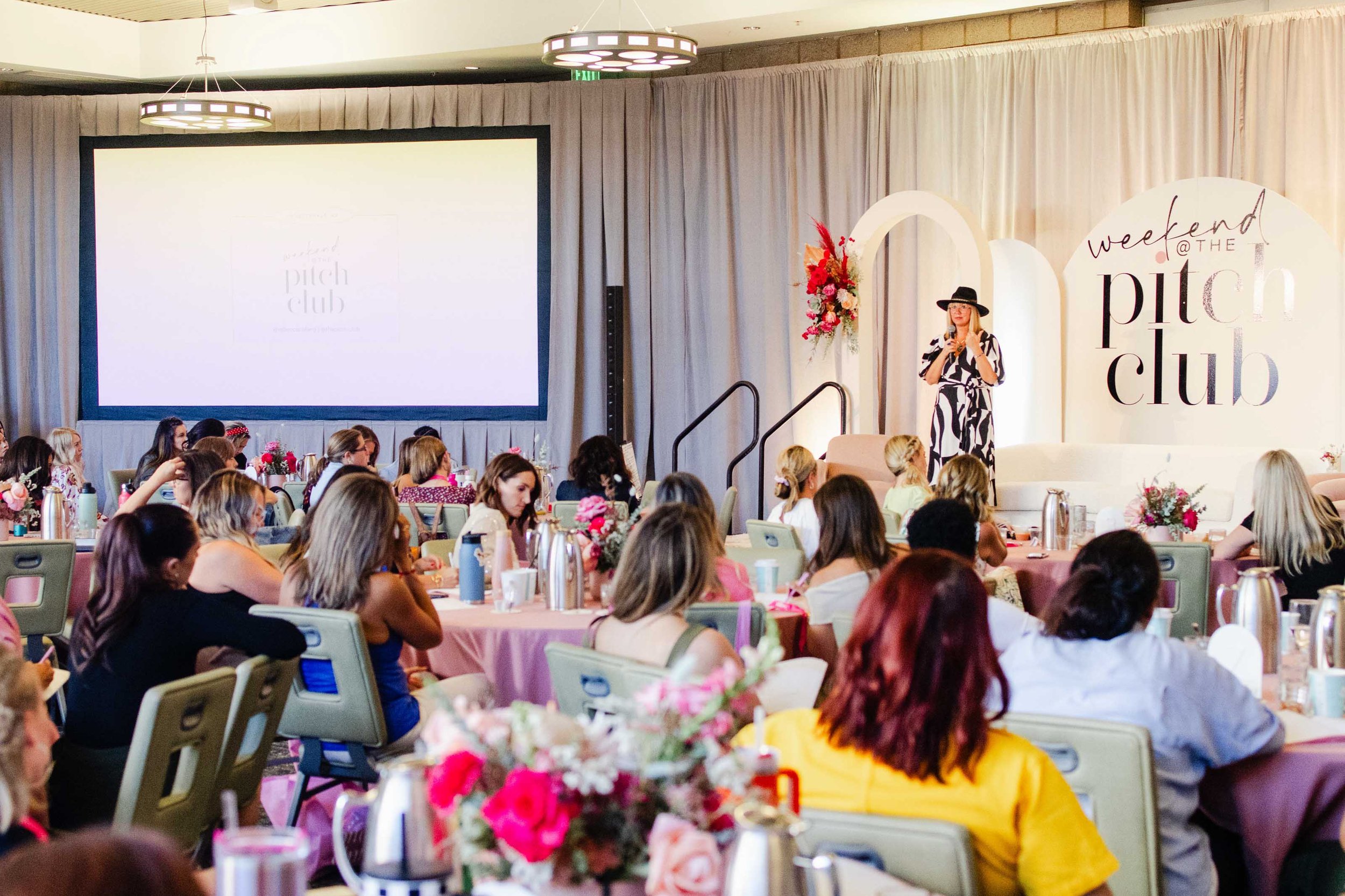
Most speaker reels look… fine.
They're beautifully shot. They have dramatic music. There's a big stage. Big lights. Maybe even a slow-motion walking shot.
And yet, they don't land.
Not because the speaker isn't good. Because the reel isn't doing the job it's supposed to do.
A speaker reel isn't a highlight montage. It's a decision-making tool. It answers one question for an event organizer:
"Do we trust this person to deliver on our stage, and do we want them for this audience?"
When that question gets a clear "yes," you get booked. When it doesn't, you get a polite pass (or worse, a ghost).
Here's what a strong speaker reel needs to get more yeses in your inbox.
What Makes a Speaker Reel Actually Work (Not Just Look Good)
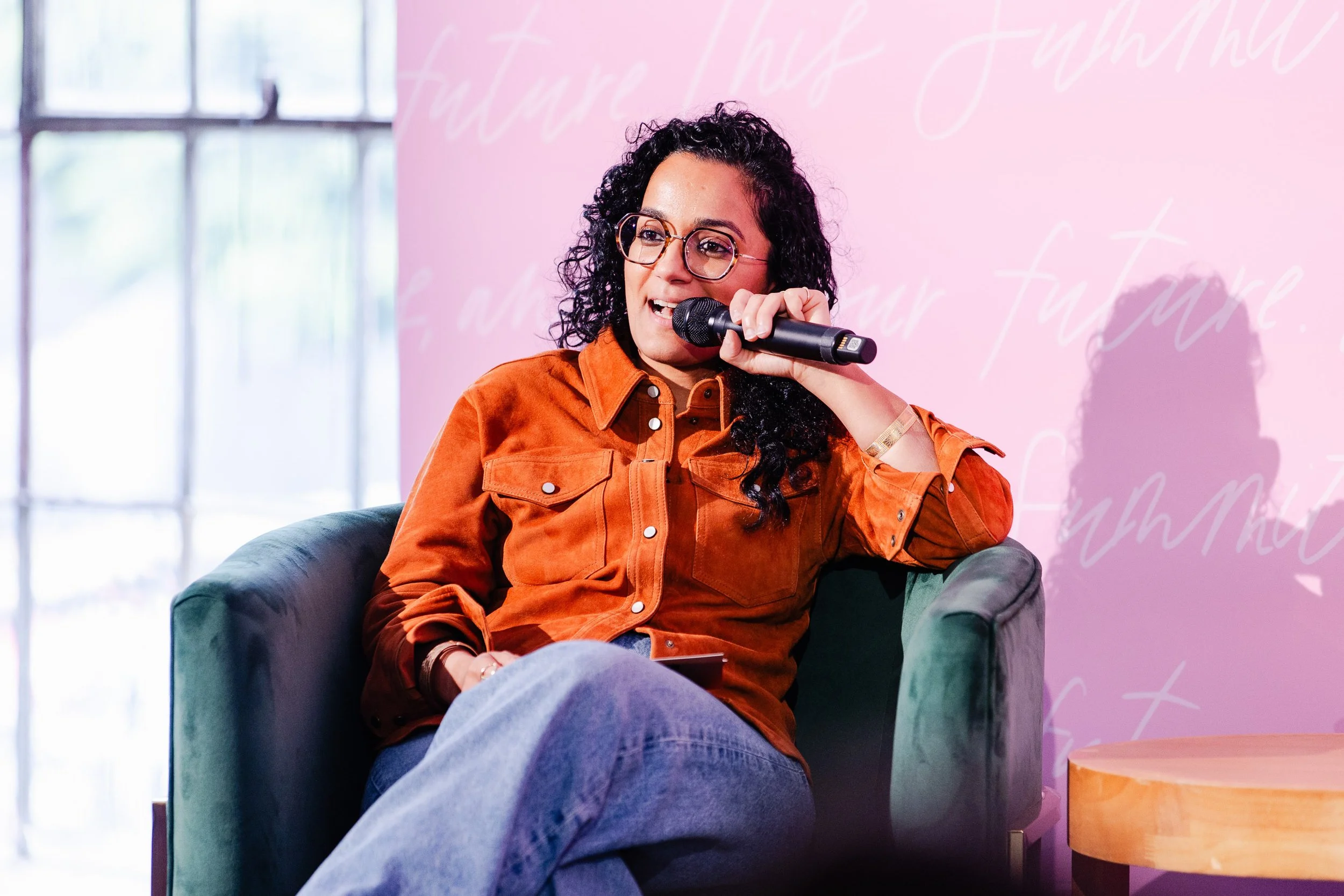
Strong speaker reels aren’t just about stage visuals — they show a speaker communicating a clear, compelling message. This is Sonya Passi, CEO of FreeFrom, speaking during a panel during the Survivor Wealth Summit in DTLA about building collective power for liberation.
A reel works when it's built around an idea.
Not a bio. Not a list of credentials. Not vibes.
A strong speaker reel makes it easy to understand:
what you speak about
what you stand for
what you want people to walk away believing or doing
If you don't have that throughline, the reel turns into "random impressive moments," and isn’t as enticing. Event organizers are looking for speakers who can move a room, not just fill a slot. Your reel needs to prove you can do that.
The best reels feel cohesive. They build momentum. They don't just show you talking at different events. They show you saying something that matters, consistently, in a way that sticks.
Your Speaker Reel Needs a Clear Message, Not Just Clips
A common misconception is that you need multiple "conference-style" talks to create a powerful reel.
The good news is, even if you’ve only taken the stage one or two times, that can still be enough, if you have other footage.
What you need is 4–5 strong examples of you communicating your ideas with confidence, and that can come from:
event videography from a conference or keynote
panels or workshops
podcast interviews (especially video podcasts)
TV segments or media interviews
book talks, moderated conversations, or fireside chats
internal company events or leadership offsites
Different formats show range. And range helps buyers picture you in their environment. A panel clip shows you can think on your feet. A keynote clip shows you can command a room. A podcast clip shows you can explain complex ideas conversationally.
Mix those formats, and suddenly your reel isn't just proof that you've spoken before. It's proof that you can adapt.
What Kind of Footage You Can Use in a Speaker Reel
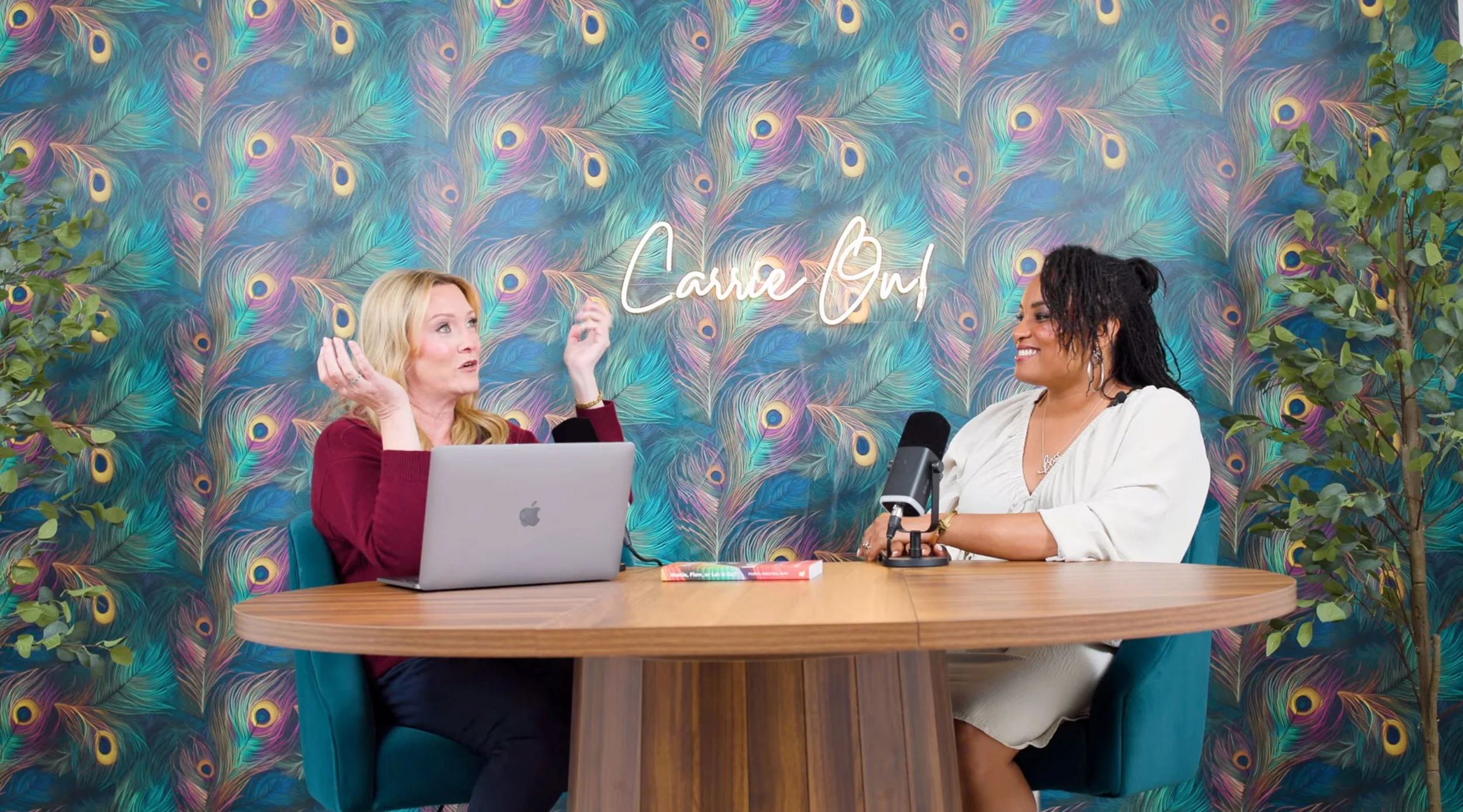
Speaker reels don’t have to rely only on stage footage — high-quality podcast interviews can also showcase expertise and presence. And if you’re just starting out, virtual podcast recordings can do the job as well, as long as the message is strong and consistent with your story. This is a still from the podcast Carrie On! with Carrie Murray.
Event organizers aren't only evaluating your content. They're evaluating your presence.
Your reel should show:
audience engagement (are people leaning in, laughing, nodding?)
pacing and energy (do you hold attention or lose it?)
clarity of delivery (can people actually follow what you're saying?)
humor, emotion, or conviction (when it fits your style)
your ability to translate complex ideas in a human way
In other words: not just what you say, how it lands.
A reel that only shows you on stage talking at people doesn't prove much. A reel that shows the room reacting, the energy shifting, the moment someone "gets it"? That's the proof buyers are looking for.
If you don't have footage of audience reactions, look for moments where your tone shifts, where you pause for effect, where you make eye contact with the camera or crowd. Those micro-moments build trust.
Why Speaker Reel Editing Matters More Than Fancy Footage
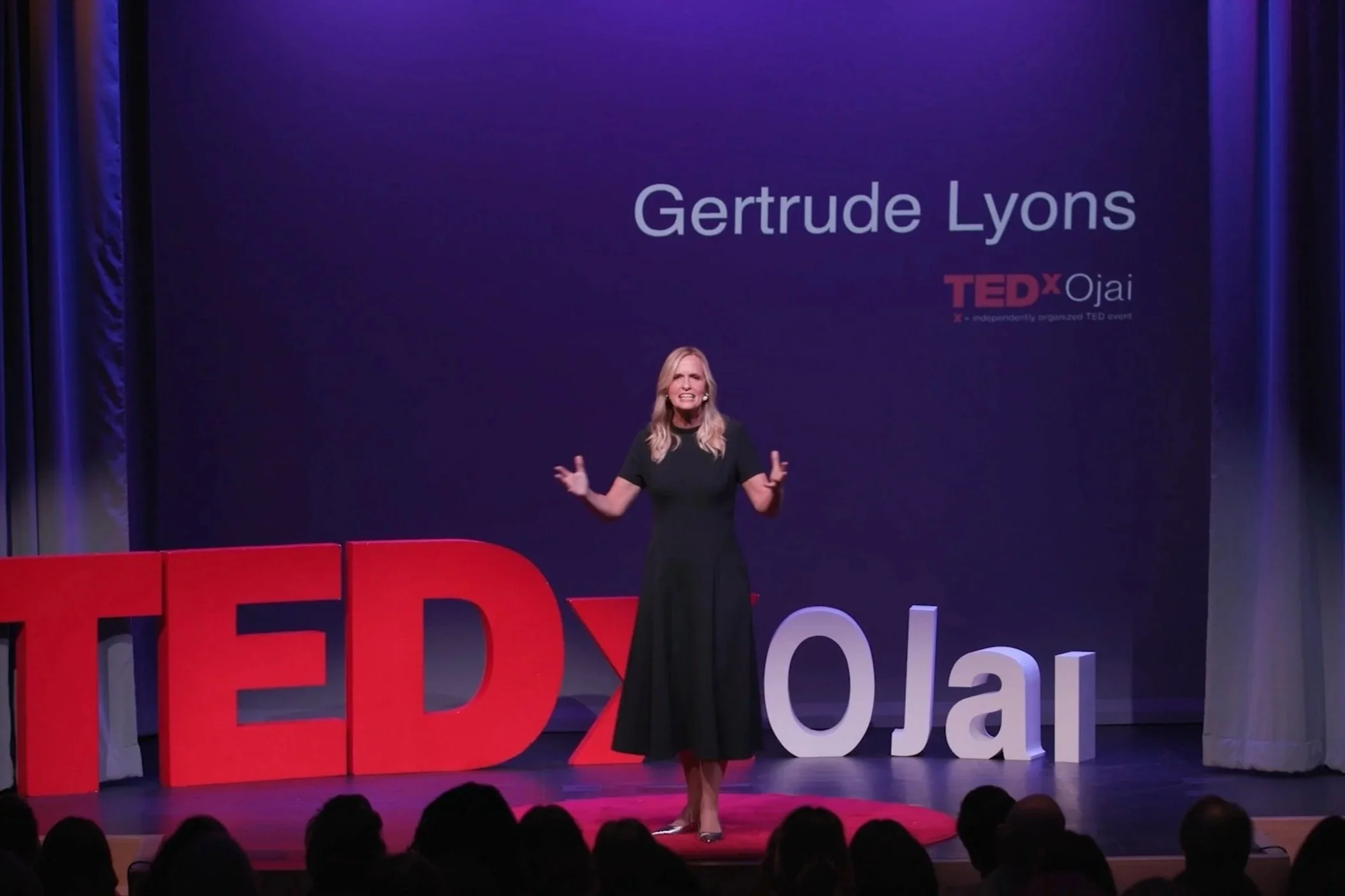
Dr. Gertrude Lyons’ finished professional speaker reel, edited to highlight her message, presence, and credibility — not just stage visuals.
Here's the part most people miss:
A reel isn't "good" because the footage is good. A reel is good because the editing is intentional.
You can have stunning 4K footage from a massive conference and still end up with a reel that feels forgettable. Or you can have iPhone clips from a scrappy panel and build something that gets you hired.
The difference between the two is always going to be one main thing: story structure.
A strong reel is edited like a story:
a hook that earns attention quickly (first 5 seconds matter more than anything else)
a clear theme that carries through (not a grab bag of topics)
clips chosen for meaning, not aesthetics (what does this moment prove about you?)
pacing that feels alive, not rushed, not dragging (music and cuts should mirror your energy)
a closing that tells people what to do next (book you, visit your site, reach out)
If your editor isn't editing for message, your reel will look beautiful and still fall flat. Production value doesn't convert. Clarity does. Credibility does. A sense of "this person gets it" does.
That's why I approach speaker reel editing the same way I approach documentary work: with journalism ethics, narrative structure, and a focus on what actually matters to the person watching.
How Long Should a Speaker Reel Be?
Your reel should be long enough to build credibility and short enough to hold attention.
In most cases, the sweet spot is 2–3 minutes.
That gives room for story, proof, and variety without testing someone's patience. Anything shorter feels incomplete. Anything longer risks losing people before you've made your case.
Think of it this way: event organizers are watching your reel alongside 10 other speakers, at minimum. If yours drags, they'll move on. If yours hooks them fast and holds momentum, you stay top of mind.
If you have multiple audiences (keynote buyers vs. brand partnerships vs. retreats), you can always create additional versions later. Start with one strong foundational reel. Adapt from there.
A Simple Speaker Reel Checklist Before You Hire an Editor
To build a reel that actually converts, you want:
3–5 strong "speaking examples" (not necessarily 3–5 keynotes)
a basic sense of your goal (book stages, book retreats, land media, etc.)
clarity on your core message (what's the throughline? what do you want to be known for?)
video files (or links) that are good enough quality to work with (doesn't need to be 4K, but needs to be clear and usable)
a place to store your assets (Google Drive/Dropbox) so you're not hunting for clips every time opportunity knocks
If you don't have polished conference footage yet, don't wait. Use what you have. A strategically edited reel built from podcast clips, webinars, and workshop footage will outperform a "perfect" reel that never gets made.
The Real Goal of a Speaker Reel: Getting Booked
A speaker reel isn't meant to prove you're perfect. It's meant to prove you're bookable.
It should make someone think:
"This is the person we want. Send me their details."
If your current reel is all aesthetics and no substance, you don't need more dramatic footage. You need a clearer message and an editor who cuts with intent.
The best speaker reels don't just show what you've done. They show what you'll bring to the next stage, the next audience, the next conversation. They make the decision easy.
While I'm based in Los Angeles and often work at conferences across California, speaker reel editing is something I do for speakers all over the country. If you're looking for an editor who understands storytelling, strategy, and what actually moves decision-makers, let's talk.
If you are ready to shape your footage into a strategic, story-driven speaker reel, you can learn more about my speaker reel production process here.
Want to see different styles of speaker reels in action?
– A transformational leadership speaker reel for Tracy O’Malley
– A hybrid speaker reel/personal brand video with testimonials for Dr. Liza Marquez
– A conference and media speaker reel for Gertrude Lyons
like this post? check out more like it!
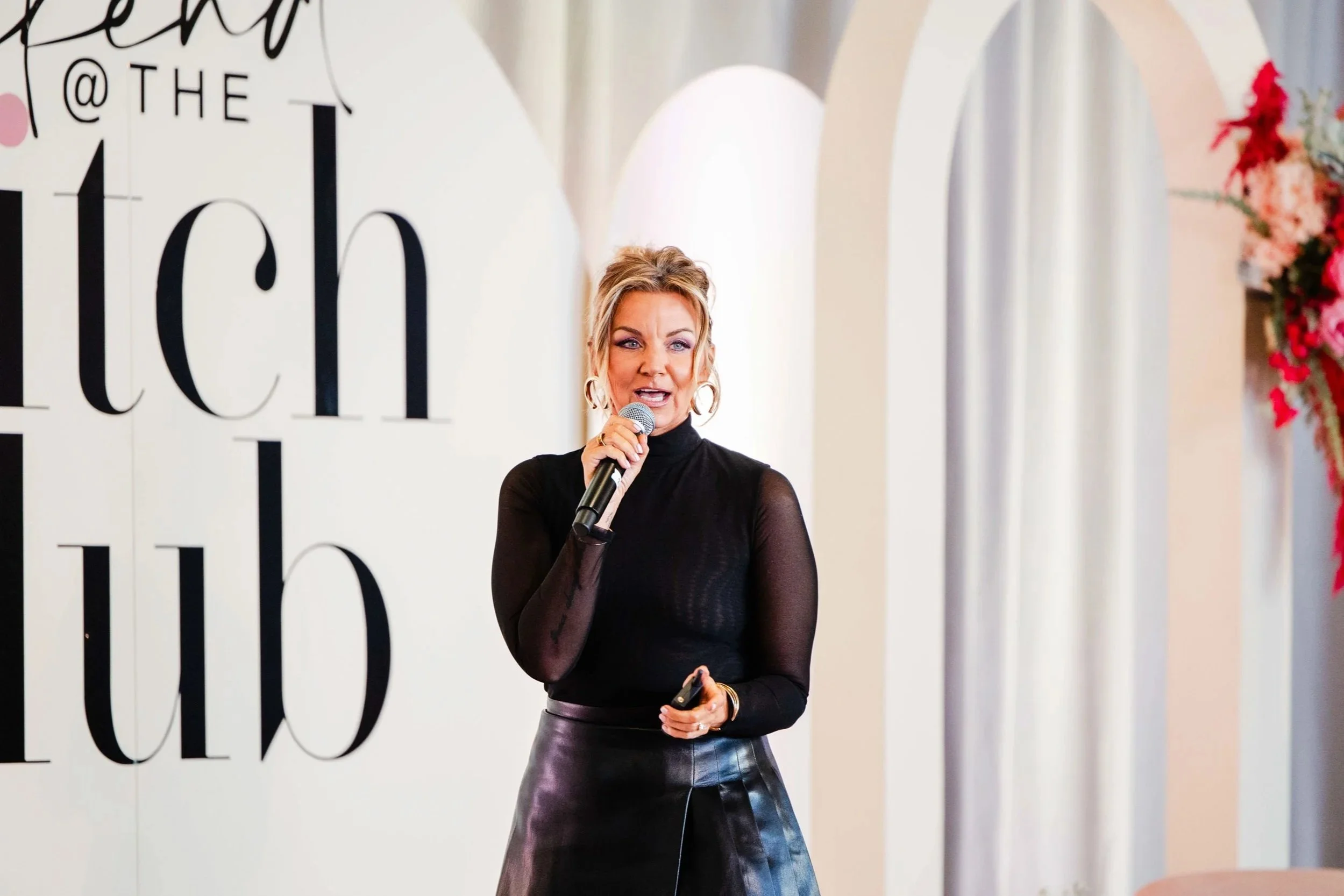

MEET BERNADETTE
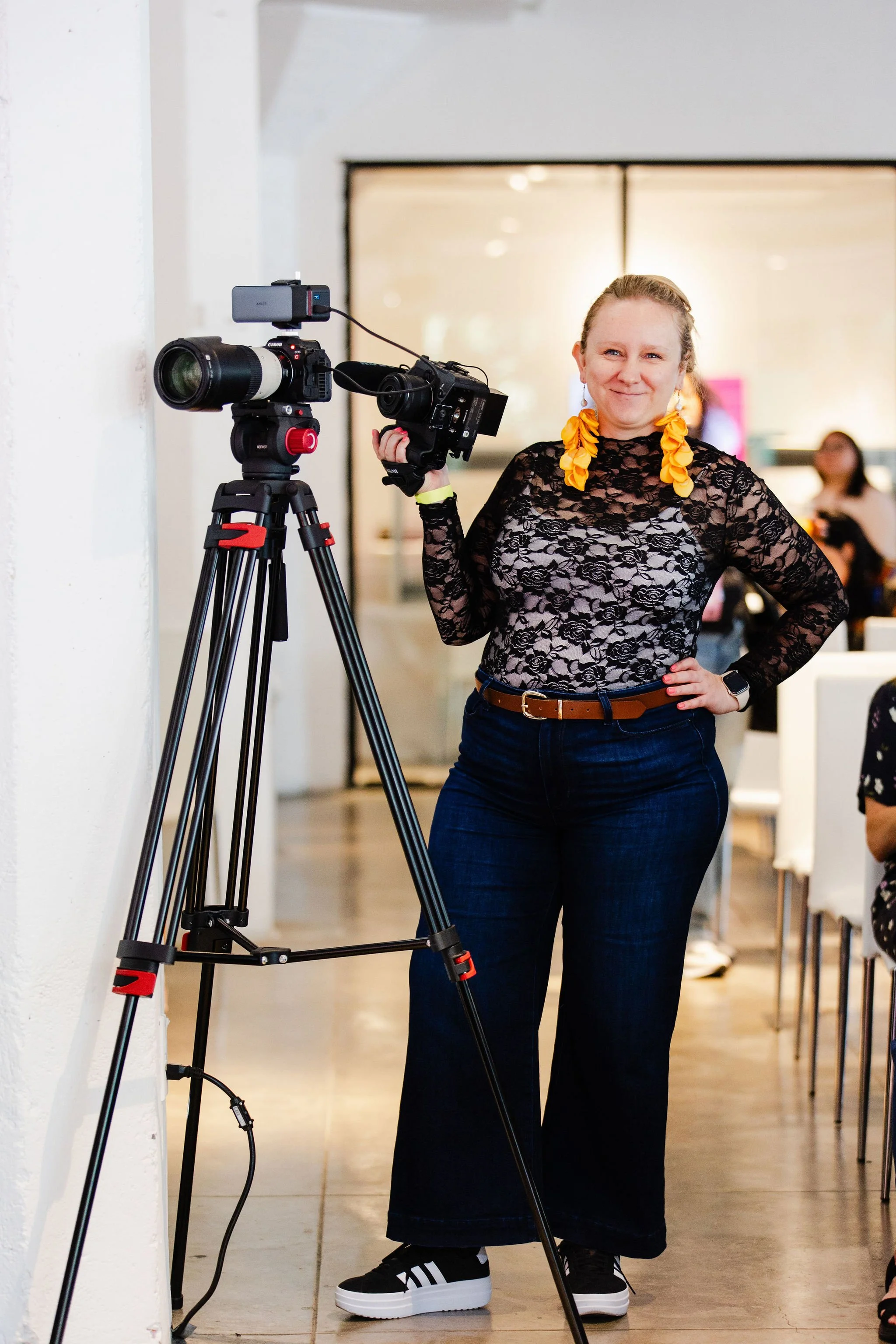
Hi! I'm Bernadette Marciniak, founder of Solhaus Media, specializing in strategic photo and video production for purpose-driven organizations, brands, and non-profits.
With roots in journalism and marketing, I help mission-focused leaders turn their work into powerful, story-driven media that builds trust, inspires donors, and drives impact. From event coverage to brand storytelling, I bring both a journalist's eye for narrative and a strategist's understanding of how content actually gets used.
When I'm not behind the camera, I'm a cat mom of two who loves good pizza, red wine, and way too many true crime documentaries.
Based in Los Angeles, the SF Bay Area, New York, and New Jersey. Working nationwide.
Discover how this hybrid speaker reel for Dr. Liza Marquez combines stage footage, personal brand messaging, and testimonials to create a powerful marketing video for speaking engagements.